El cuarto de baño de Henry Miller. pic.twitter.com/wdTHuvQYfP— Jonathan Martínez (@jonathanmartinz) July 7, 2018
Mostrando entradas con la etiqueta escritores. Mostrar todas las entradas
Mostrando entradas con la etiqueta escritores. Mostrar todas las entradas
7.7.18
El cuarto de baño de Henry Miller

19.6.18


23.3.17
¿Por qué la frase final de "El Castillo" de Kafka está a medias?

Kafka es considerado hoy día uno de los escritores más importantes de todos los tiempos, pero esto estuvo a punto de no ser así. En vida publicó dos colecciones de relatos, además de los que aparecieron publicados en revistas literarias de la época. Pero la mayoría de su trabajo fue publicado después de su muerte. Pero antes de que esto ocurriera, Kafka le había pedido a su íntimo amigo Max Brod que, en cuanto falleciera, se encargara de quemar todos sus manuscritos. Brod, consciente de la enorme calidad de sus textos, decidió ingnorar la petición apocalítica de su amigo, y "El Proceso", "El Castillo" y "America" fueron publicados póstumamente.
"El Castillo" es la última obra conocida del autor. Escrito con esa ansiedad existencial que le caracteriza, trata el tema recurrente a lo largo de su trabajo de la burocracia bizarra, la alienación y la culpa, con esa extraña fusión entre realismo y fantasía.
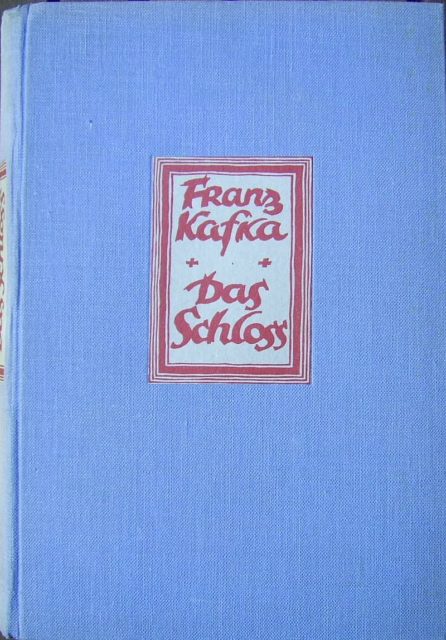 |
Front cover of the first edition of Kafka’s The Castle, 1926
|
Kafka comenzó a escribir esta novela en 1922, nada más llegar a la estación de montaña de Spindlermühle, que actualmente forma parte de la República Checa. En aquel momento ya estaba terriblemente enfermo de tuberculosis, pero había decidido terminar la novela en el transcurso de los próximos años.
No le dio tiempo.
Kafka murió de tuberculosis el 3 de junio de 1924, a los 40. Estuvo cerca de terminar "El Castillo", pero la frase final de la novela está a medias debido a su muerte prematura.
No le dio tiempo.
Kafka murió de tuberculosis el 3 de junio de 1924, a los 40. Estuvo cerca de terminar "El Castillo", pero la frase final de la novela está a medias debido a su muerte prematura.

21.6.15
Oliver Sacks on keeping a diary
Sacks writes:
I started keeping journals when I was fourteen and at last count had nearly a thousand. They come in all shapes and sizes, from little pocket ones which I carry around with me to enormous tomes. I always keep a notebook by my bedside, for dreams as well as nighttime thoughts, and I try to have one by the swimming pool or the lakeside or the seashore; swimming too is very productive of thoughts which I must write, especially if they present themselves, as they sometimes do, in the form of whole sentences or paragraphs…But for the most part, I rarely look at the journals I have kept for the greater part of a lifetime. The act of writing is itself enough; it serves to clarify my thoughts and feelings. The act of writing is an integral part of my mental life; ideas emerge, are shaped, in the act of writing.My journals are not written for others, nor do I usually look at them myself, but they are a special, indispensable form of talking to myself.

Dr. Sacks captures a thought in his journal at Amsterdam's busy train station (Photograph: Lowell Handler)
He adds:
The need to think on paper is not confined to notebooks. It spreads onto the backs of envelopes, menus, whatever scraps of paper are at hand. And I often transcribe quotations I like, writing or typing them on pieces of brightly colored paper and pinning them to a bulletin board.Read more: Brain Pickings
31.5.15
On Edna O'Brien

What book hasn’t been written that you’d like to read?
The life and loves of the stars, as they float, mingle and collide in the galaxies.
Who would you want to write your life story?
Colum McCann.
What books do you find yourself returning to again and again?
“Heart of Darkness”; “Light in August”; “Out of Africa”; “The Rings of Saturn”; the short stories of Kafka; “Sabbath’s Theater”; “Disgrace”; Virginia Woolf’s letters and diaries; “Ariel,” by Sylvia Plath; the “Collected Poems” of Emily Dickinson, Elizabeth Bishop, Czeslaw Milosz, Seamus Heaney, Osip Mandelstam, Anna Akhmatova, Marina Tsvetaeva, Wallace Stevens.
What books are you embarrassed not to have read yet?
“Don Quixote.”
Read More: New York Times
30.5.15
On Dorothy Parker

"She seemed able to produce the well-turned phrase for any occasion. A friend remembered sitting next to her at the theater when the news was announced of the death of the stolid Calvin Coolidge. “How can they tell?” whispered Mrs. Parker."
INTERVIEWER
Do you think economic security an advantage to the writer?
PARKER
Yes. Being in a garret doesn’t do you any good unless you’re some sort of a Keats. The people who lived and wrote well in the twenties were comfortable and easy living. They were able to find stories and novels, and good ones, in conflicts that came out of two million dollars a year, not a garret. As for me, I’d like to have money. And I’d like to be a good writer. These two can come together, and I hope they will, but if that’s too adorable, I’d rather have money. I hate almost all rich people, but I think I’d be darling at it. At the moment, however, I like to think of Maurice Baring’s remark: “If you would know what the Lord God thinks of money, you have only to look at those to whom he gives it.” I realize that’s not much help when the wolf comes scratching at the door, but it’s a comfort.
(...)
INTERVIEWER
That’s not showing much respect for your fellow women, at least not the writers.
PARKER
As artists they’re not, but as providers they’re oil wells; they gush. Norris said she never wrote a story unless it was fun to do. I understand Ferber whistles at her typewriter. And there was that poor sucker Flaubert rolling around on his floor for three days looking for the right word. I’m a feminist, and God knows I’m loyal to my sex, and you must remember that from my very early days, when this city was scarcely safe from buffaloes, I was in the struggle for equal rights for women. But when we paraded through the catcalls of men and when we chained ourselves to lampposts to try to get our equality—dear child, we didn’t foresee those female writers. Or Clare Boothe Luce, or Perle Mesta, or Oveta Culp Hobby.
More: Paris Review
24.11.12
Los hábitos de escritura de Joyce Carol Oates

Trato de escribir por mañana muy intensamente, de 8:30 a 13. Cuando viajo puedo trabajar de 10 de la noche a 3, sola no duermo que bien. Tengo un montón de trabajo terminado en habitaciones de hotel. El trabajo es un consuelo para la soledad. Escribo a mano. No tengo un procesador de textos. Escribo lentamente.
¿Es capaz de leer cuando está escribiendo?
Generalmente leo por la noche. Acabo de volver de Europa, estaba leyendo Jane Austen en el avión. Yo podría estar sin leer nada... Yo nunca pierdo el tiempo. No veo mucha televisión. Perder el tiempo no está en mi naturaleza. Me resulta difícil entender por qué la gente pierde deliberadamente el tiempo.
¿Suele hacer lecturas de veraneo?
Preferiría tomar veneno, o más bien masticar vidrio esmerilado.
USA Weekend, July 29, 2001
Los hábitos de escritura de J.M. Coetzee

"Coetzee," según el escritor Rian Malan, "es un hombre de casi una actitud monacal respecto a su autodisciplina y dedicación. No bebe, no fumar y no come carne. Recorre grandes distancias en bicicleta para mantenerse en forma y pasa por lo menos una hora en su escritorio cada mañana, siete días a la semana. Un colega que ha trabajado con él durante más de una década afirma haberlo visto reír sólo una vez. Un conocido ha asistido a varias cenas en las que Coetzee ha pronunciado ni una sola palabra."
New Statesman, October 25, 1999
Los hábitos de escritura de Truman Capote

¿Cuáles son sus hábitos a la hora de escribir? ¿Utiliza una mesa? ¿Una máquina de escribir?
Soy un autor absolutamente horizontal. No puedo pensar hasta que no estoy tumbado, ya sea en la cama o en un sofá, con un cigarrillo y un café a mano. Necesito estar dando sorbos y caladas. A mediodía cambio el café por té de menta, después por vino blanco y después por martini. No, no utilizo máquina de escribir. No al principio. Escribo una primera versión a mano, a lápiz. Después hago una revisión completa también a mano. Fundamentalmente me considero un estilista, y los estilistas nos volvemos unos obsesos con la colocación de una coma, con el peso de un punto y coma. Este tipo de obsesiones y el tiempo que me llevan, me irritan de manera insoportable.
The Paris Review, Issue 16, 1957
Los hábitos de escritura de W. H. Auden

Vía: The New Yorker

3.11.12
Cita de Oscar Wilde

“All women become like their mothers. That is their tragedy. No man does. That’s his.” —The Importance of Being Earnest.
Suscribirse a:
Entradas (Atom)